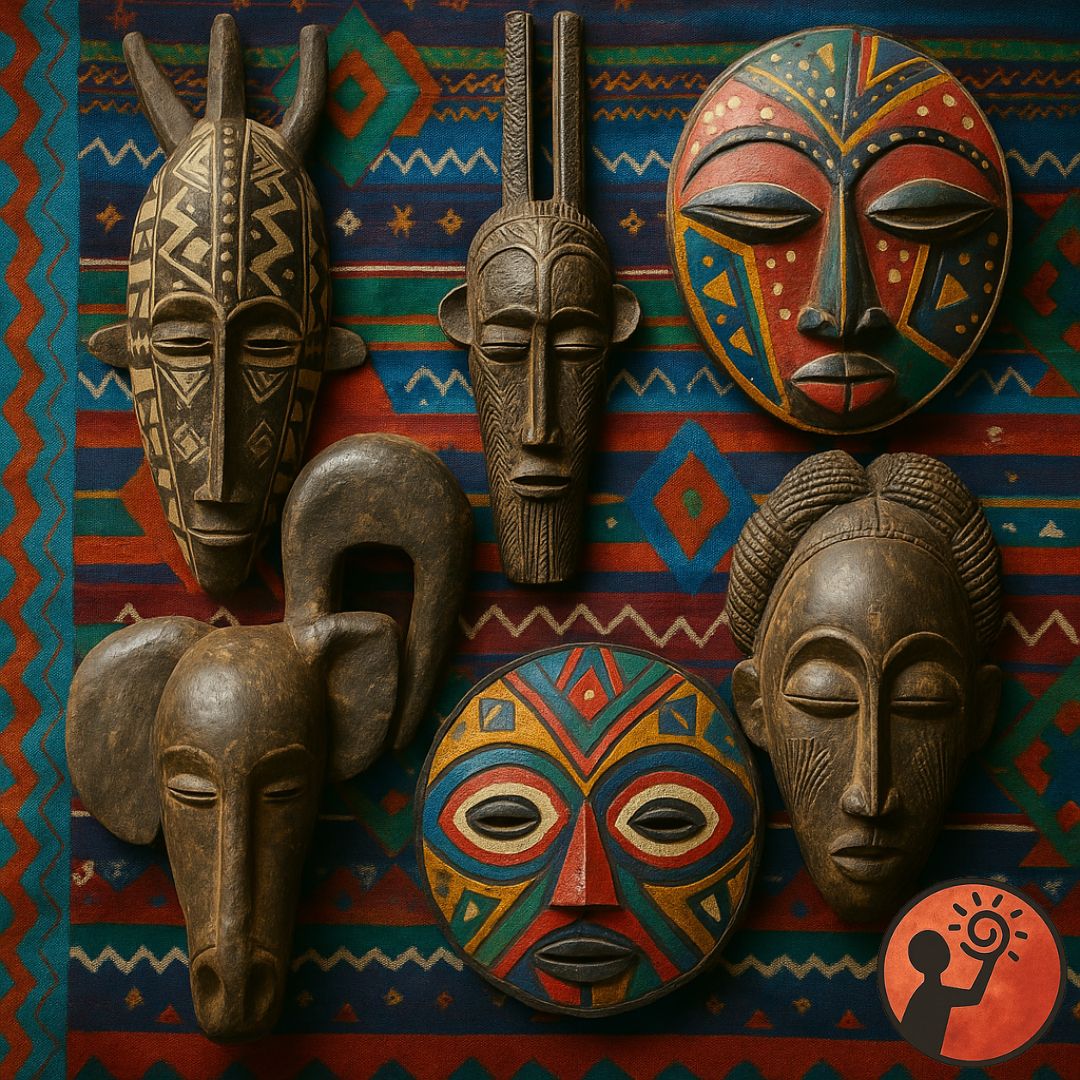
The Symbolism Behind West African Masks
Introduction: More Than Just Art
West African masks are among the continent’s most recognizable and powerful symbols. Crafted by hand, painted with natural pigments, and worn in dance and ritual, these masks represent far more than artistic skill. They embody centuries of tradition, belief, and community. In this post, we explore the deep symbolism behind West African masks, their role in society, and what makes them a cherished form of African heritage art.
The Roots of Mask Making in West Africa
Mask-making is a sacred tradition in many West African cultures, notably among the Dogon of Mali, the Bwa and Mossi of Burkina Faso, and the Yoruba and Igbo peoples of Nigeria. Each ethnic group brings its own styles, materials, and meanings. Traditionally, masks are carved from wood, decorated with pigments, beads, and raffia, and passed down through generations.
Symbols and Meanings: Beyond the Surface
- Spiritual Connection: Masks often represent spirits of ancestors, gods, or natural forces. They serve as mediums between the human and spirit worlds during ceremonies.
- Social Order: Some masks are used to enforce laws, teach morals, or settle disputes. They remind the community of tradition and respect for elders.
- Fertility & Harvest: Many masks celebrate fertility, rain, and bountiful harvests, featuring motifs like the sun, animals, or plants.
- Transformation: During rituals, a mask wearer “becomes” the spirit it represents—bridging the everyday and the sacred.
Iconic Masks and Their Stories
Bwa Butterfly Mask (Burkina Faso): The dramatic butterfly mask, with bold black and white geometric patterns, honors the spirits of nature and marks the start of planting or harvest seasons.
Dogon Kanaga Mask (Mali): Recognizable for its double cross shape, the Kanaga mask symbolizes the connection between heaven and earth.
Yoruba Gelede Mask (Nigeria): Used in Gelede festivals to celebrate and appease “Mothers”—the female ancestors whose wisdom and power shape society.
The Role of Masks in Ceremony and Dance
West African masks are not static museum pieces—they come alive in dance, music, and storytelling. Dancers wearing masks perform at births, funerals, initiations, and harvest festivals. Their movements, costumes, and rhythms invoke blessings, chase away evil, and unite the community.
Modern Influence: African Masks in Global Art
The unique forms of West African masks have inspired artists worldwide, from Picasso and the Cubists to contemporary fashion designers. Today, genuine African masks are prized collectibles, but their spiritual meaning should always be respected and understood.
How to Identify an Authentic West African Mask
- Materials: Traditional masks use wood, natural dyes, and organic fibers—beware of plastic or machine-made fakes.
- Signs of Use: Ritual masks often have wear, repairs, or traces of pigments from performances.
- Story & Origin: Authentic masks come with a known ethnic origin, style, and cultural purpose. Ask for provenance when collecting.
Experience the Power of African Mask Art
At Ubuntu African Art, we are proud to curate a selection of authentic West African masks and artifacts. Each piece in our collection tells a story—of community, spirit, and tradition. If you’re interested in collecting, learning, or experiencing African mask art, browse our West African Artifacts Gallery or contact us for guidance and sourcing.