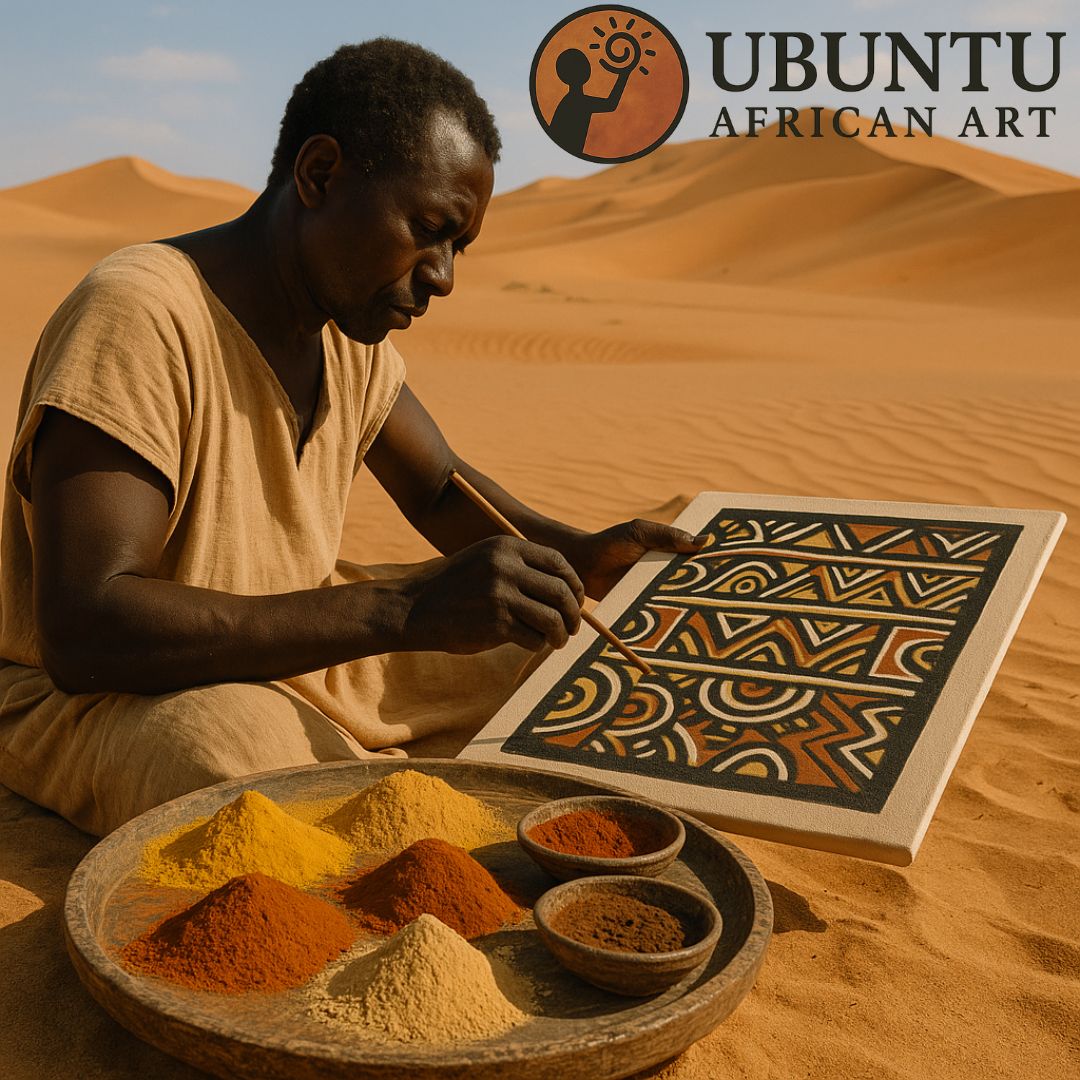
Colors of the Sahara: A Journey Through Desert Art and Heritage
The Sahara: Where Sun, Sand, and Spirit Meet
Spanning more than nine million square kilometers, the Sahara is the world’s largest hot desert—a breathtaking expanse of sand, rock, and sky that stretches across North Africa from the Atlantic to the Red Sea. Yet, to the cultures who call it home, the Sahara is more than an ocean of dunes: it is a canvas painted with ancient stories, sacred symbols, and, above all, color. The artistry of the Sahara’s people—Tuareg, Berber, Fulani, Toubou, and many more—has been shaped by the desert’s challenges and wonders for millennia.
Blue: The Signature of the Tuareg
No color is more iconic in Saharan art than the deep indigo blue of the Tuareg people, often called the “Blue People” for the way this dye rubs off onto their skin and garments. Tuareg artisans have mastered the complex process of creating indigo cloth and turbans, a tradition passed down for centuries. Blue represents protection from the desert sun, spiritual wisdom, and noble status.
Indigo dyeing is labor-intensive, involving repeated soaking and sun-drying to achieve its rich depth. The resulting fabric—used for turbans, veils, and robes—has become a symbol of Saharan resilience and sophistication, recognized by collectors and designers worldwide.
Red, Gold, and Black: The Palette of Life and Power
While blue may dominate the northern desert, fiery reds and brilliant golds pulse through Berber rugs, jewelry, and wall hangings. Red ochre, drawn from the earth, is a symbol of vitality and protection—used for body art, pottery, and dyeing wool. Gold evokes sunlight, prosperity, and divine favor, appearing in intricate beadwork and metalwork.
Black, meanwhile, grounds these vibrant shades, representing strength, the mysteries of night, and the enduring wisdom of the ancestors. Together, these colors form the visual language of the Sahara, seen in everything from Tuareg silverwork to Fulani textiles.
Ivory and Sand: Soft Tones of Serenity
Amid the bold colors of the desert, the neutral tones of ivory, sand, and bone create a sense of calm and elegance. These hues appear in camel leatherwork, bone-inlaid jewelry, carved beads, and handwoven baskets. They evoke the purity of desert light, the clarity of dawn, and the wisdom found in silence.
For many Saharan communities, these soft colors are more than mere decoration—they’re essential to the balance and harmony of life.
Textiles: Stories Woven in Thread
Textile art is at the heart of Saharan creativity. Berber carpets from Morocco, Tuareg tents from Mali and Niger, and Fulani blankets from Chad each carry centuries of knowledge in their designs. Traditional patterns—zigzags, diamonds, spirals—act as protective symbols and records of migration, family, and trade.
- Berber Rugs: Renowned for their warmth and symbolism, often woven with vibrant reds and golds and passed down through generations.
- Tuareg Tents: Portable homes stitched from camel and goat hair, decorated with blue and black motifs for protection and status.
- Fulani Blankets: Known for their striped and checkered patterns in natural dyes, blending aesthetics with practicality.
Every piece is a blend of art and daily life—a legacy of women artisans whose skills ensure their culture’s survival through the ages.
Symbols and Patterns: The Secret Language of the Desert
In the Sahara, patterns are more than beautiful designs. Triangles symbolize femininity and fertility. Diamonds suggest protection and continuity. Spirals echo the journey of the sun and life’s cyclical nature. Tifinagh script—the ancient Berber alphabet—appears in jewelry, leather, and architecture, preserving stories and prayers across the centuries.
These motifs connect the Saharan people to their ancestors, to nature, and to one another. Each piece of art is a testament to memory, survival, and shared spirit—what we at Ubuntu African Art call the Ubuntu of the desert.
Women at the Loom: Keepers of Culture
The artistry of the Sahara is driven by its women. From Morocco to Mauritania, women are the master weavers, dyers, and embroiderers whose hands preserve tradition. Their work is not only practical but sacred, with techniques taught from mother to daughter for generations. Their creativity ensures that the colors of the Sahara never fade.
Modern Desert Design: Tradition Meets Innovation
Today, Saharan art inspires a new generation of African and global designers. Contemporary fashion houses borrow Tuareg indigo, Berber patterns, and Fulani beadwork for runways and interiors. Yet, the essence remains unchanged: art rooted in land, ancestry, and identity.
At Ubuntu African Art, we believe in celebrating and sustaining this living heritage. We partner with Saharan artisans to bring you authentic, ethically sourced art that honors the past while shaping the future.
How to Recognize Genuine Saharan Art
- Natural Dyes: Indigo, henna, ochre, and saffron are hallmarks of authenticity.
- Handmade Techniques: Look for uneven edges and subtle imperfections—signs of artisan craftsmanship.
- Symbolic Patterns: Seek out triangles, diamonds, and Tifinagh script—each has a meaning.
- Storytelling: Each item should have a story of tradition, family, or migration woven in.
Preserving the Palette: Why Your Support Matters
The colors of the Sahara are not just beautiful—they are a vital record of African memory and ingenuity. By supporting genuine artisan crafts, you help keep these traditions alive and empower the communities who create them.
Every piece in our collection sustains an artist, a family, and a culture. When you choose Saharan art, you become part of a living legacy.
Explore Our Sahara Collection
Ready to add a splash of desert magic to your life? Browse the Colors of the Sahara Collection and bring home a story told in color. For guidance on care, display, or history, contact the Ubuntu African Art team any time.