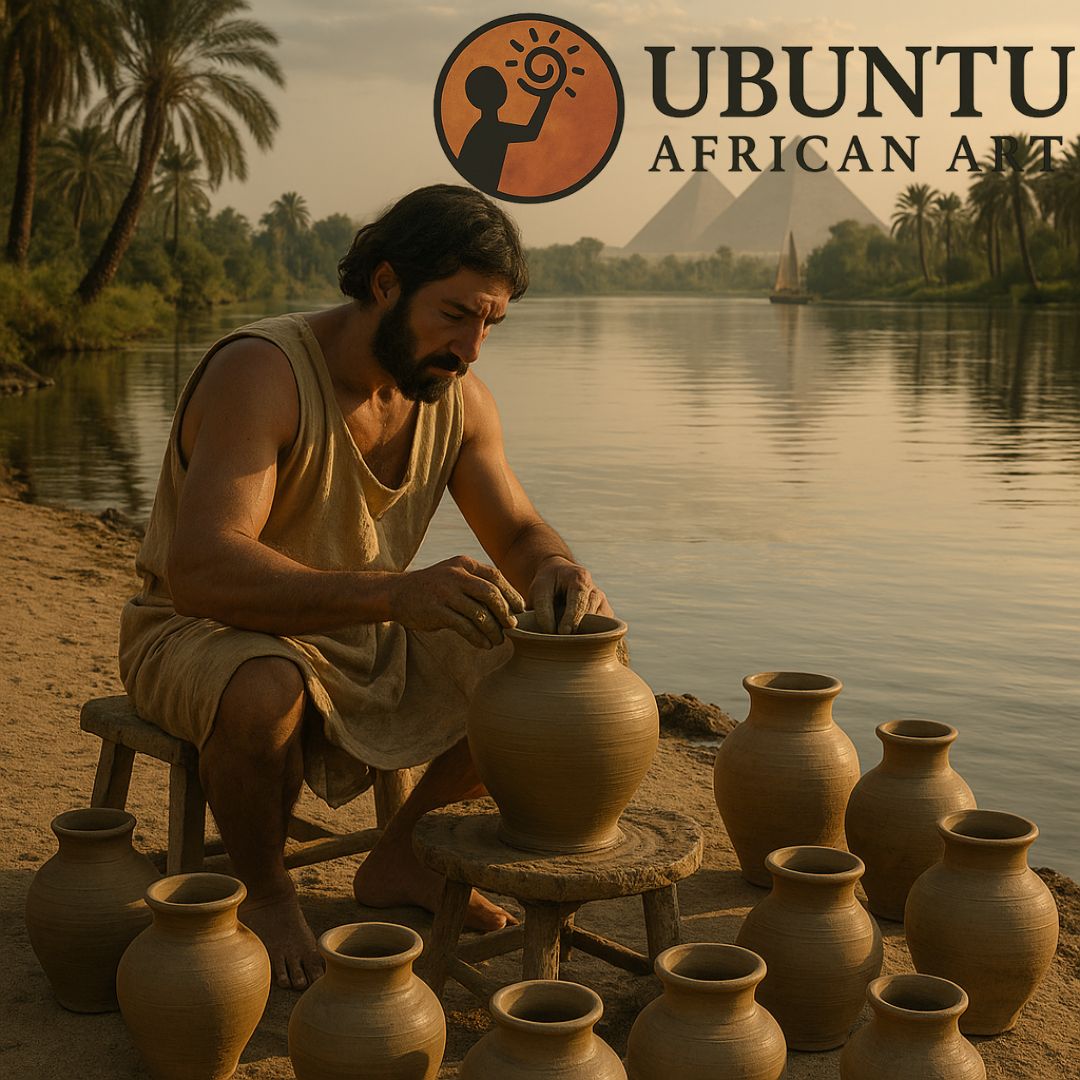
Artisans of the Nile: The Legacy of Creativity Along Africa’s Lifeblood
The River Nile: More Than a Waterway
The River Nile is often called the lifeblood of Africa. Stretching over 6,600 kilometers, it is the longest river in the world, flowing from the heart of the continent through lush valleys, deserts, and ancient kingdoms before reaching the Mediterranean Sea. But beyond its geographical marvel, the Nile has been a cradle of civilization and creativity, nurturing countless generations of artisans whose work still inspires awe today.
From Pharaohs to Folk Artists: The Enduring Influence of Nile Artisans
When people think of Nile Valley art, images of golden pharaohs, towering pyramids, and grand temples come to mind. Yet, behind every monumental structure or gilded mask stood a community of skilled artisans. These were the painters, carvers, potters, weavers, and goldsmiths whose hands shaped the soul of ancient Egypt, Nubia, and Kush. Their artistry was not just decorative but deeply spiritual, telling stories of gods, ancestors, everyday life, and the eternal journey.
Ancient Egyptian artisans, often working in workshops attached to temples or royal projects, developed a sophisticated system of apprenticeships. Their secrets were passed down through generations, evolving distinct styles that remain influential in African art today. From the flowing lines of hieroglyphics to the bold geometric patterns found on pottery, the legacy of these creative ancestors endures.
Materials from the Land, Inspiration from the Spirit
The abundance of natural resources along the Nile fostered a diversity of crafts. Soft, workable Nile clay became vessels and figurines. Gold, copper, and faience were transformed into jewelry and amulets. Papyrus, a symbol of the Nile itself, was both a medium for art and the world’s first paper. Artisans sourced pigments from desert minerals, turning the ochres and blues of the landscape into iconic murals and tomb paintings.
The art of the Nile Valley wasn’t created in isolation. Over millennia, the region became a crossroads of cultures, from the bustling markets of Thebes and Memphis to the powerful Nubian kingdoms further south. Styles and motifs flowed up and down the river, blending Egyptian, Nubian, and Kushite influences into a vibrant visual language still echoed in contemporary African crafts.
Craftsmanship as a Sacred Calling
For Nile artisans, creativity was more than a skill—it was a sacred duty. Artists and craftsmen often held esteemed roles in society. Inscriptions reveal the pride these creators took in their work, signing their names on tombs and temples. Many believed their creations held magical properties, ensuring safe passage to the afterlife or invoking divine favor.
Objects such as the ushabti (funerary figurines), meticulously carved in limestone or wood, were believed to come alive and serve their owners in the next world. Amulets shaped like scarabs, ankhs, or the Eye of Horus blended art and belief, offering protection and wisdom to the wearer.
Women and the Hidden Hands of Nile Creativity
While ancient texts often praise male craftsmen, women were also vital creators. They spun flax into linen, the prized fabric of pharaohs and priests, and embroidered ceremonial garments. Women’s role in pottery, beadwork, and weaving continues to be celebrated in Nubian communities today, where ancestral skills are handed down in vibrant, living traditions.
From Ancient Walls to Modern Workshops: A Living Legacy
The influence of Nile Valley artisans radiates far beyond Egypt’s borders. Decorative patterns found on Nubian houses, the weaving techniques of modern Sudanese craftswomen, and the intricate beadwork of East African tribes all share roots with the art of the Nile.
In the 21st century, contemporary African artists and designers are rediscovering the motifs and methods of their ancestors. By integrating hieroglyphic symbols, papyrus textures, or Nile-inspired palettes, they create works that connect the past with the present. The story of the Nile’s artisans is alive and thriving in every brushstroke, bead, and carving.
The Ubuntu Spirit: Honoring the Artisan
At Ubuntu African Art, we celebrate the spirit of shared humanity—ubuntu—that flows through every work of art. The artisans of the Nile remind us that creativity is a gift to be passed on, connecting us to our ancestors and to each other. By honoring their legacy, we support not just the preservation of history, but the living traditions that shape African identity today.
How to Recognize Authentic Nile Valley Art
- Materials: Look for natural clays, gold, faience, and papyrus. Authentic Nile art is often crafted with respect for traditional materials.
- Symbolism: Iconic motifs such as the lotus, scarab, ankh, or sun disc point to spiritual and royal meanings.
- Technique: Detailed carvings, careful symmetry, and the use of bold colors are hallmarks of skilled craftsmanship.
- Storytelling: Each artifact, from jewelry to murals, often tells a story or holds a protective function.
Preserving Heritage: Why Artisan Crafts Matter
The value of African artisan crafts goes far beyond aesthetics. They are living archives of knowledge, resilience, and cultural pride. By supporting traditional artisans and celebrating their work, we help ensure these skills survive for generations to come.
At Ubuntu African Art, we seek out authentic, ethically sourced art from across the continent—including pieces inspired by the rich legacy of the Nile. Every purchase supports artists, families, and communities who continue to shape Africa’s creative future.
Experience the Artisans of the Nile Collection
Whether you are a collector, a lover of African history, or someone searching for a meaningful piece of décor, the story of the Nile’s artisans offers endless inspiration. We invite you to explore our curated collection, learn the stories behind each work, and become a steward of African creativity.
Ready to bring a piece of Nile heritage into your home? Browse the Artisans of the Nile Collection or contact us for sourcing, history, or care tips for your artwork.