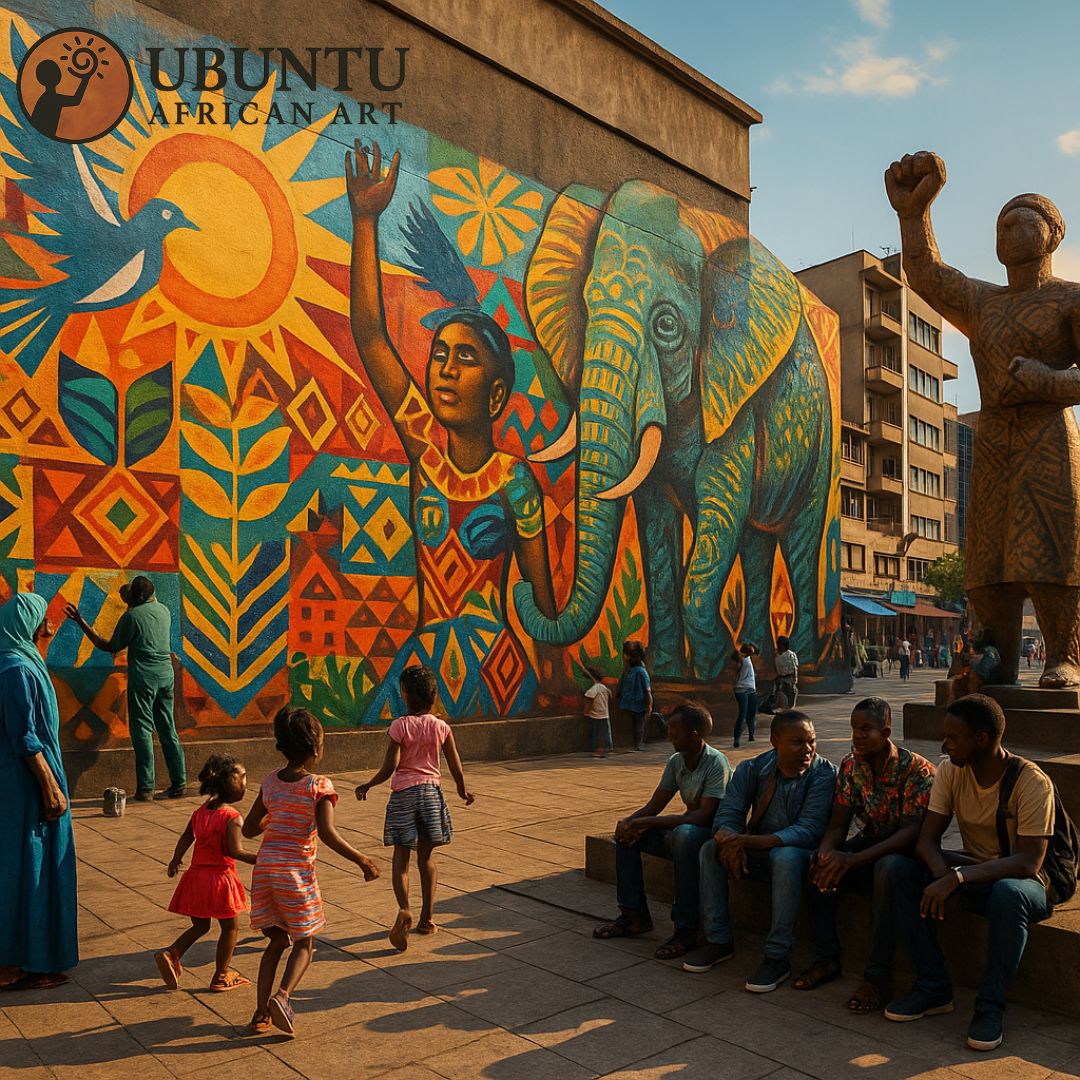
African Art in Public Spaces: Transforming Cities and Communities
Art Without Walls: The Spirit of Public African Art
Across Africa, creativity isn’t confined to galleries and private homes. From the busy streets of Johannesburg to the rural villages of Ghana, public art transforms cities, communities, and collective memory. These murals, sculptures, and installations serve as vibrant touchstones for identity, unity, and social change.
Why Public Art Matters
- Celebrating Heritage: Public murals and sculptures often showcase traditional patterns, legends, and local heroes.
- Fostering Community: Art in shared spaces brings people together, encouraging dialogue and pride.
- Economic Impact: Iconic installations attract tourism and can spark new opportunities for local artists and businesses.
- Urban Renewal: Once-neglected spaces come alive with color and hope through artistic transformation.
Iconic African Murals and Installations
In Cape Town, the Woodstock Street Art movement turned rundown warehouses into a living outdoor gallery, telling stories of apartheid, freedom, and future dreams. Lagos’s Oshodi Art Gallery and the Makoko Floating School mural are symbols of resilience and hope, painted by and for the community. In Dakar, Senegal, the Renaissance Monument soars as a testament to African strength and ambition.
Beyond cities, even village crossroads and community centers showcase sculpted drums, spirit animals, and storytelling mosaics, each piece adding to the evolving visual language of Africa.
Case Study: Nairobi’s Matatu Murals
In Nairobi, local artists transform public transport minibuses—matatus—into rolling works of art. These mobile canvases feature everything from political commentary to tributes to pop icons, making art accessible and ever-present for millions each day.
Rural Public Art: Rooted in Tradition
Rural art projects often revive endangered skills and stories. In Zimbabwe, Shona stone sculptures grace open plazas, while in Burkina Faso, mud-brick homes become geometric masterpieces through ceremonial painting. These works are a living reminder that heritage evolves, yet remains grounded in place and people.
Community Empowerment Through Creation
Many public art projects involve the community from start to finish—planning, designing, and painting together. This collective process not only enhances public spaces, but strengthens social bonds, offers skills training, and provides income. The resulting art belongs to everyone, fostering shared responsibility and lasting pride.
Challenges and Opportunities
- Protecting outdoor art from weather, vandalism, and urban development
- Securing funding and municipal support
- Balancing tradition with bold new visions for Africa’s cities
Yet, where there are challenges, there is also innovation. Movements like Graffiti South Africa and Artscape Lagos prove that public art is a tool for activism, healing, and renewal.
How You Can Support Public African Art
- Visit, photograph, and share your favorite murals and sculptures
- Commission public art for schools, clinics, or business districts
- Donate to nonprofit projects or local artists creating positive change
- Celebrate and protect public art as part of your community’s story
Public Art as Living Legacy
At Ubuntu African Art, we believe that every mural and sculpture in public view is a legacy for generations. By supporting public art, you help nurture hope, creativity, and unity from the heart of Africa’s cities to its smallest villages.
Contact us to learn more about our community partnerships or to share your favorite examples of African art in public spaces.